Frontline Technologies: Most Promising Investment Directions in 2026
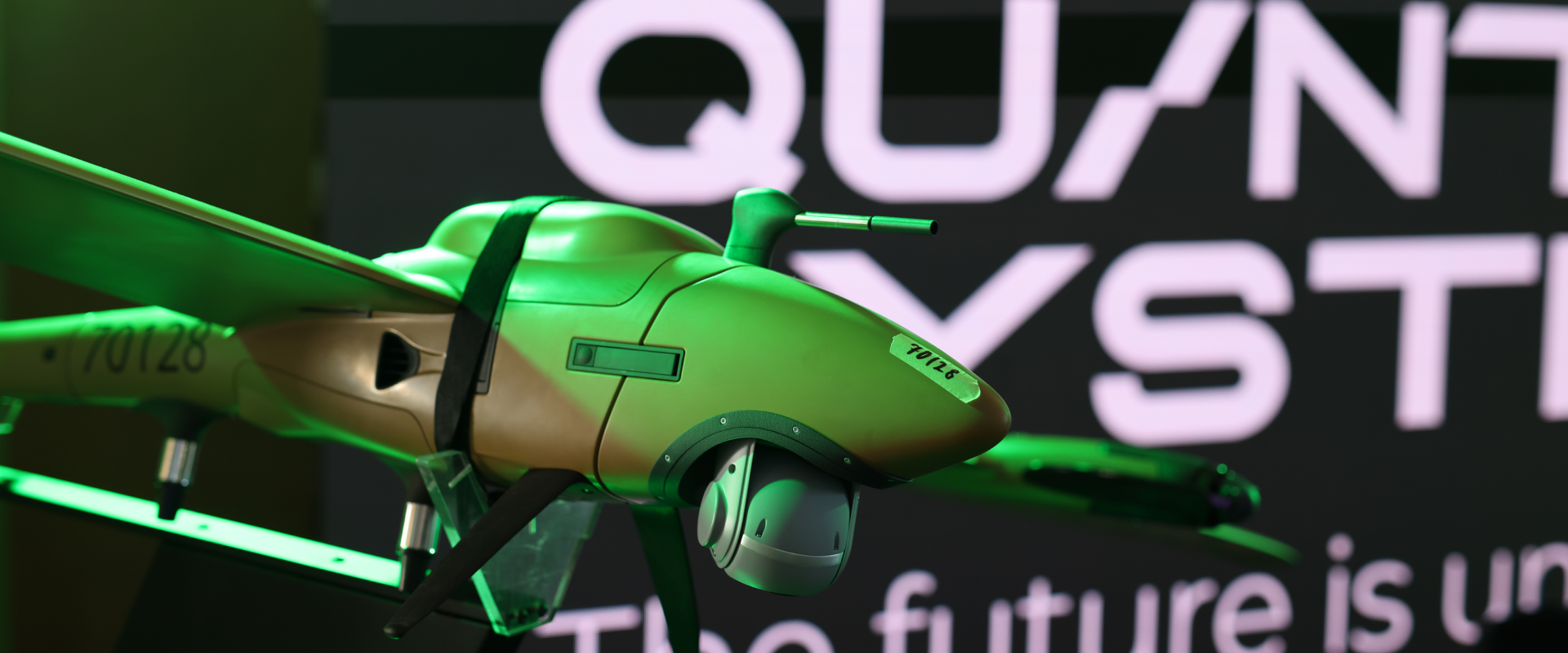
For several years now, Ukraine has been a living testing ground for technological innovation in the defense sector. Combat operations have become a catalyst for the formation of an entire technology market, where solutions with high tactical value are rapidly tested and deployed on the front line. As a result, Ukraine today is not only a consumer of defense products but also a source of innovations that attract the attention of both local investors and international partners.
Since 2023, the traditional Startup Competition at Ukraine’s largest tech event, IT Arena, has actively included defense technologies: a special category for defense tech startups was introduced, and every year these startups present their projects.
This means the defense technology sector in Ukraine is opening up fundamentally new investment opportunities. Below is an overview of the key areas that may be the most promising for investors who want to be part of this transformational process today.
1. Resilient communication systems and radio communications
Stable, secure communications are among the highest priorities in modern conflicts. Ukrainian developments in this field go far beyond traditional radios and include:
- – the development of tactical networks that operate under active electronic jamming;
- – mobile and portable solutions with high resistance to surveillance and interception;
- – autonomous communication systems with low energy consumption.
Teams are increasingly working not with individual devices, but with comprehensive tactical networks. This trend was clearly visible at the Startup Competition at IT Arena: from Himera tactical radios, which took first place in 2023, to mesh solutions for robotic platforms by 2025 finalist Bravo Dynamics, demonstrating how communications are becoming the backbone of autonomous systems.
These technologies are needed not only by armies, but also by a wide range of operational units, special services, and international partners working on future tactical network standards.
2. Unmanned aerial systems (UAV/UCAV)
Drones have long since ceased to be purely reconnaissance platforms. Modern unmanned systems are autonomous and semi-autonomous vehicles capable of performing:
- – target acquisition and fire adjustment;
- – autonomous patrols;
- – precision strikes;
- – delivery of cargo to hard-to-reach areas.
This area was one of the most visible at IT Arena, where Norda Dynamics demonstrated approaches to autonomous UAV control, while the winner of the defense category of the Startup Competition 2025, Dwarf Engineering, presented a software infrastructure that can scale across different types of robotic systems.
3. Electronic warfare (EW) and counter-EW
In modern warfare, those who control the electromagnetic spectrum gain a significant tactical advantage. EW systems:
- – suppress or disorient enemy sensors;
- – protect own equipment from interception;
- – create tactical zones of invisibility.
Ukrainian teams already have practical experience developing such solutions. Among them are startups BabAI (second place in the Startup Competition 2025) and Falcons (a 2023 finalist), which work in electronic warfare and signal direction-finding systems. Such developments are increasingly attracting the attention of international partners and investors, as they represent critically important technologies with high scaling potential.
4. Detection and countermeasure systems against unmanned threats
The widespread use of drones has created the challenge of detecting and responding to autonomous aerial objects. This includes:
- – sensors for automatic detection;
- – early warning systems;
- – integrated solutions with automatic threat identification.
Over the years, IT Arena has featured optical and thermal imaging approaches as well as alternative sensor systems. For example, Oko Camera works with thermal imaging modules for drones, while Zvook and Vidar Systems are developing acoustic detection methods that complement traditional surveillance tools.
5. Data processing, analytics, and artificial intelligence
Data is a powerful resource for tactical decision-making. A core component of modern defense systems is technology capable of:
- – integrating data from multiple sources;
- – creating real-time situational maps;
- – automatically classifying objects or anomalies.
This approach is well illustrated by Ukrainian teams such as Kolossal, which works with OSINT data, and Mantis Analytics, which focuses on analytical defense solutions. Such platforms are becoming the foundation for real-time tactical decision-making.
Why these areas are about investment
These areas share several important characteristics that make them attractive for capital:
- – real-world use cases with strong market demand;
- – rapid validation of solutions in extreme conditions, reducing investor risk;
- – export growth potential, as these challenges are not limited to Ukraine.
Today, investing in defense tech means not only supporting a country’s defense capability but also having the opportunity to be part of a global technological transformation.
The defense technology sector in Ukraine is going through a formative phase that combines extensive combat experience with innovative development approaches. This creates favorable conditions for investors who want to support projects not only for their local value but also for their potential to become key players in the global defense tech market. Plan your participation in Startup Competition 2026 and the Defense Expo at IT Arena 2026 now to be among those shaping the future of Ukrainian defense technologies.
Buy Early Bird Ticket and Save up to $350