Beyond Code: Yonathan Levin on AI, Resilience, and What Makes a Developer Stand Out
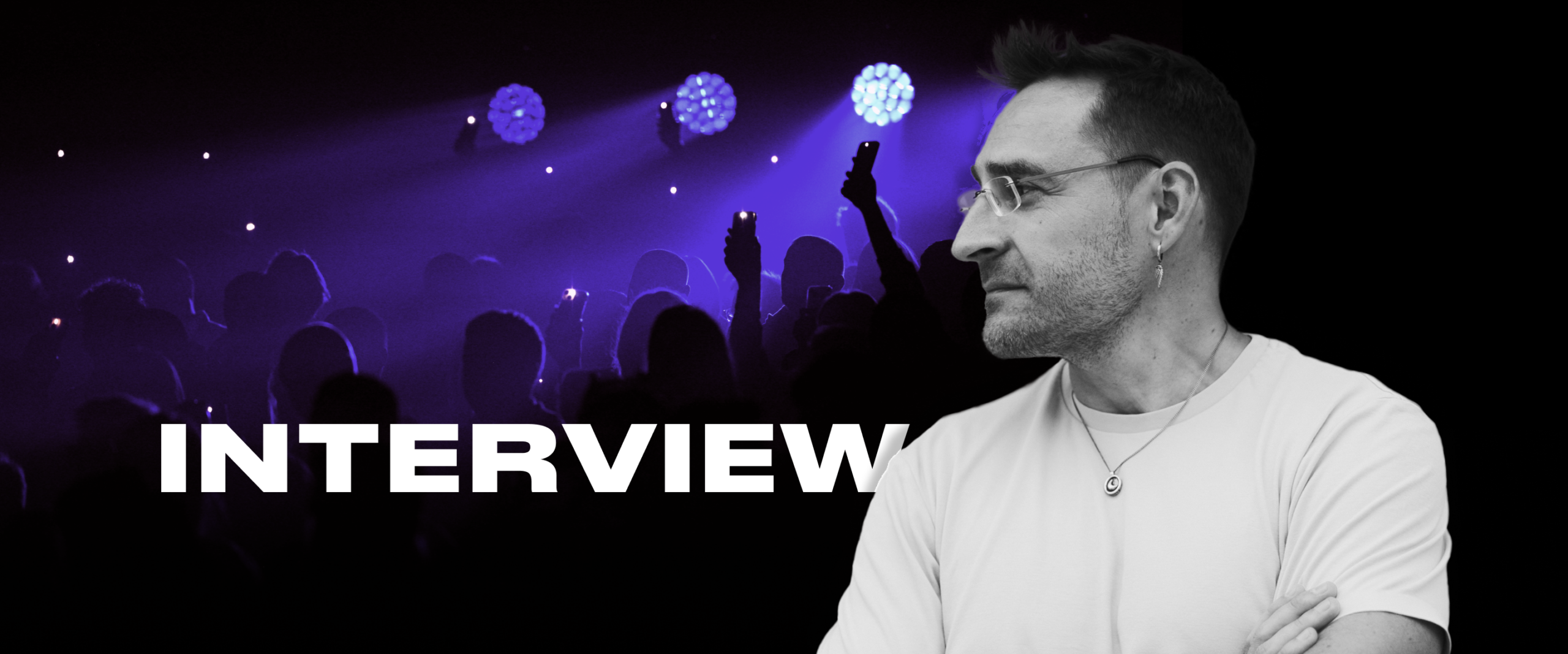
Yonathan Levin, CTO & Co-Founder, Stealth Startup, has seen what it takes to build technology at scale — from the early days of monday.com as a fast-growing startup to the challenges of creating products used by millions of people worldwide. As an early builder, he worked across AI initiatives, public APIs handling billions of requests, and mobile platforms that had to grow as fast as the company itself.
We spoke with Yonathan about what scaling really looks like from the inside, how AI is reshaping the way companies build and operate, and why resilience has become one of the most important qualities for both teams and founders. We also explored what it means to turn ambitious ideas into products that create real impact — and what today’s software developers should keep in mind as technology moves faster than ever.
— Based on your experience scaling monday.com, what were the biggest challenges you and your team had to solve?
— I joined monday.com when it was a small startup — we had one floor in a small building and just a few dozen people. The company grew very fast, both in terms of business and team size, and that in itself was a challenge. In that kind of growth, the architecture you choose at the beginning quickly becomes outdated because the scale becomes really intense.
Over nearly six years at monday.com, I worked at five different companies. At first, it was a small startup, then a hypergrowth startup, then a mature company, then an IPO-stage company, and eventually a huge enterprise with over $1 billion in revenue.
Each stage required something different, which meant we had to constantly evolve our mindset and approach. Leading a team of four people is very different from leading a team of twenty. At some point, you need structure, middle management, and a new way of organizing teams.
Architecture was another area where we had to reinvent ourselves. I started as the leader of a small mobile team. As the team grew, so did the way we operated. We had to redefine how we worked, how we split features, how we organized teams across areas and domains, and how we collaborated to keep moving fast at scale.
Most of the company consisted of full-stack developers, while the mobile team worked separately. We had a very mature web product, but the mobile application felt like its younger sibling trying to catch up and barely keeping pace. And the speed of growth was insane. One of the challenges was matching the development pace and using the same APIs, which were changing every day.
As the company grew, another challenge for me was deciding where I wanted to go career-wise. I had started as the leader of a small team, but then I had to ask myself: do I want to lead a large group of people? Do I want to become a group manager? Or do I want to stay closer to development? These are questions you need to answer at some point. But it is also okay to change your mind, because the writing isn’t always on the wall.
So I decided to switch direction completely — from mobile to the backend world — to help build the next stage of scale for monday.com. We started focusing on enterprise customers, and they needed strong infrastructure and a reliable public API. Once again, it started to feel like a small startup: at the beginning, it was just me; then, building a team and the product.
— What has changed the most in the process of building a global company in the AI era?
— When AI emerged, nobody really knew at the beginning what it was, and what we would do with it. The challenge, by the way, was: how do we, a mature enterprise company that IPO’d on NASDAQ, introduce something so immature, unsure, like AI, to other enterprise customers? I remember we got a letter from one of the customers, saying, ” You don’t turn anything AI-related into our account”. So we started building more to figure out what we could build, doing all kinds of experiments. Experimenting is a different state of mind — you move fast, you break, you try, it’s not working, you’re trying something else.
I think the most important skill for AI today is to ship fast, break it, measure it, and then improve and ship it again. So the cycle has become much shorter. Besides that, I think being open is also important. Monday.com had a very established business, managing all kinds of projects, processes, and the AI came and shook it up. Now, when everything is changing, one of the most important things is to stay open to change, not be too afraid of it.
— What do you think about AI agents? How to make them reliable and effective?
— I think that the idea is pretty clever: having AI agents that specialize in different areas, such as travel, marketing, or fitness. So basically, you have a store where you can hire a whole bunch of AI agents, each one an expert in its own field. One major drawback is that today’s models are good at everything, which means everything is averaged out.
So I think, long-term, this is what we want: deeply specialized AI agents that we can trust. And then, actually, how do you build trust? How do you know that you can trust an agent? How do you know that it’s giving you the right answer? I think one of the biggest challenges today is evaluation and access to high-quality datasets.
And by the way, if you ask me what the next bottleneck is and what the next wave of promising startups will focus on, I think it will be companies that provide data — highly curated, field-specific data. This is where the real opportunity lies, because all these agents need specific data in specific fields.
— Looking back at your journey from engineer to CTO-level responsibility, what was the hardest skill to develop?
— Resilience. I think one of the defining things about being in a startup is the number of unknowns. Basically, you deal with them every day. You are building something without knowing whether it will work or not. You live in a world where something unexpected happens every day. In Israel, for example, every single week brings a new crisis. Ukrainians can understand this very well.
Being resilient is one of the toughest things — no matter what happens, you keep going. You need to believe that you are on the right path, that things will be all right, and that you will figure it out.
I think resilience is the hardest and most rewarding skill you can develop as a developer, company founder, or leader. Whether you are a leader, a parent, or a startup founder, continuing to move forward no matter what is one of the hardest and most meaningful things you can learn.
— What skills should engineers focus on to stay relevant in today’s AI-first world?
— I think we used to measure good developers by their expertise in specific frameworks: iOS, Android, Node.js, Go, and so on. But with AI, many of these frameworks become less important because AI already has access to more knowledge than any individual person, as well as all kinds of documentation. So it matters less which language or framework you use.
What really matters today is the ability to see the bigger picture — to zoom out and understand how to apply technology, why you are applying it, why this language or approach makes sense, what you should build, how you should build it, and how it should work. I think this is the most important thing for engineers today.
It is no longer about putting on headphones and hiding behind a screen. It is about understanding why you are building what you are building, what the best way to build it is, what you are trying to achieve, how to measure it, how to communicate it, and how to validate it. These are all the things that happen around development itself.
Developers often dislike product managers and spec-driven development — the idea of receiving a specification, building it, and meeting again in a month. But now, it has actually become part of the developer’s ownership. We need to make sure the spec covers everything we need and is clear, manageable, and predictable and use this spec as input to guide the AI on what exactly to develop. An AI Code Assistant is as good as the spec it uses.
To be the real owner of what you are developing, you also need to own the user journey and care about it. That is what will make developers really stand out: the ability to connect all the dots, understand the real reason behind the work, own the “why” behind what we develop, and explain it to others.
When I hire a developer, I am not just looking for the most experienced person or someone who is an expert in Node.js. I am looking for someone who wants to understand why we are building what we are building, wants to be part of it, takes ownership, moves fast, embraces change, understands the reason behind the work, and connects everything together. I think this is where we, as developers, can really stand out.
— How do you recognize the signals that a startup is building something that really matters?
— There is a framework for that: product-market fit. It is when the product meets a real market need. You define the problem, measure how big it is, and then start building.
Personally, I like to run experiments before building the actual product to see whether people would really pay for it. Instead of investing a lot of money into development, you build something very small first.
Once, I built a simple website with a fake button. It included a description of the problem and how we planned to solve it. When people clicked the button, they saw a message saying, “Sorry, we’re still working on it.” This helped me measure how many people read the website, understood the problem and our solution, and then clicked the buy button. It was a way to get an early signal that we were moving in the right direction.
Basically, you evolve step by step. You build more and more to see whether you are moving toward product-market fit.
And these signals are measurable. You define what success looks like through KPIs. What you really need to measure is not only website visitors, but also how many people actually buy the product, how long they stay with it, whether they eventually leave, and how many of them churn. You also need to understand how much it costs to bring users into the system, how much each user pays you, and for how long. That is how you start understanding whether you are building something the market truly needs.
— If an AI startup founder comes to you after your IT Arena talk for advice, what kind of project would you most want to hear about?
— Personally, I like projects in the B2C space. Here in Israel, many startups are focused either on cybersecurity or SaaS, and there are not that many B2C projects. But I think B2C is one of the most engaging areas to build in.
In SaaS, you have to go through the whole sales process: reaching out to companies, getting them to sign contracts, going through legal and security reviews — the cycles are very long. In B2C, the cycle is much shorter. You can put an app in the App Store or launch a website and see the results almost immediately.
I really like B2C projects because they are more interesting to me, they are customer-facing, and you can see and measure the value much faster. Today, building something also does not require such a big investment, especially if you are building on your own. Solopreneurs are becoming a real thing. It is much easier today to build something, ship it, and learn from the market.
— You have led a community that supports developers. What value do communities bring to engineers?
— I truly believe that we become the people we surround ourselves with. If you are surrounded by people who are constantly working to change something, create, and learn, this is what you become as well. You also learn to grow, improve, and move forward.
The opposite is also true. If you surround yourself, for example, only with people who like to party and drink — and I am not saying that going to parties is a bad thing; I personally really enjoy it — but if that is the only thing happening around you, you will start to feel and act the same way.
For me, building a community of developers is about uniting people around a shared goal, helping them learn, and creating space for knowledge exchange. It is about building a network of people who know and care for each other and create the conditions for special things to happen.
One of the funniest stories is about two participants — a boy and a girl — who met through my community — Android Academy. They started dating at a hackathon that was part of the community, and eventually married and built a family together.
So it is not only about development. It is also about how people meet each other, how their circles help them grow, learn together, overcome challenges, and build their careers. We all want to be surrounded by good people — and that is what community is really about.
— What are you focused on today, and what future of technology do you think we will face in the next two to three years?
— The future is changing so fast, but I am fascinated by it. Today, I am focused on a startup in the education field, where AI is not only part of the development process but also at the core of the product. We are using different kinds of models and agents.
My main challenge now is how to transform the development process I used to be at the center of into a place where I am no longer the one writing the code. It is about turning myself from a developer into, let’s call it, a facilitator — someone who manages multiple agents, sets the context for many of them, and helps them write code. So the question is: how do I stop being the bottleneck and become the enabler that lets all these agents run and work?
This is where the industry is going. Development will become increasingly autonomous, and we, as developers, will focus on building everything around the development process: providing agents with the right context, explaining why a feature is needed, defining how it should be built, and trusting AI to do the job. This is not the future — this is already happening now.
— What questions do you want people to ask themselves after your IT Arena session?
— I think that if people leave my lecture and ask themselves, “What am I doing now? Does it matter? Does it make a difference? Or am I just working 9 to 5, doing my job, and getting a salary?” — that would mean a lot to me. One of my core beliefs in life: people should feel that their time here on Earth can be used to create something important — for themselves, for others, for the world, or for society.
We really can do it. I see it every day in my work: people are building things for others and changing other people’s lives. It is possible, and especially now, with AI, it has become even more real. So I really want people to know that they are capable, and that work does not have to be just work — it can always be something more.
Technology is changing fast, but the questions behind it remain deeply human: why we build, who we build for, and how we keep moving forward when everything around us shifts. This September at IT Arena 2026, Yonathan Levin will share his perspective on AI, resilience, and what truly matters for developers in the next era of technology.
Buy your ticket now and join us in September to hear Yonathan live.