Why Great Products Still Start with People: A Conversation with Laura Morgan
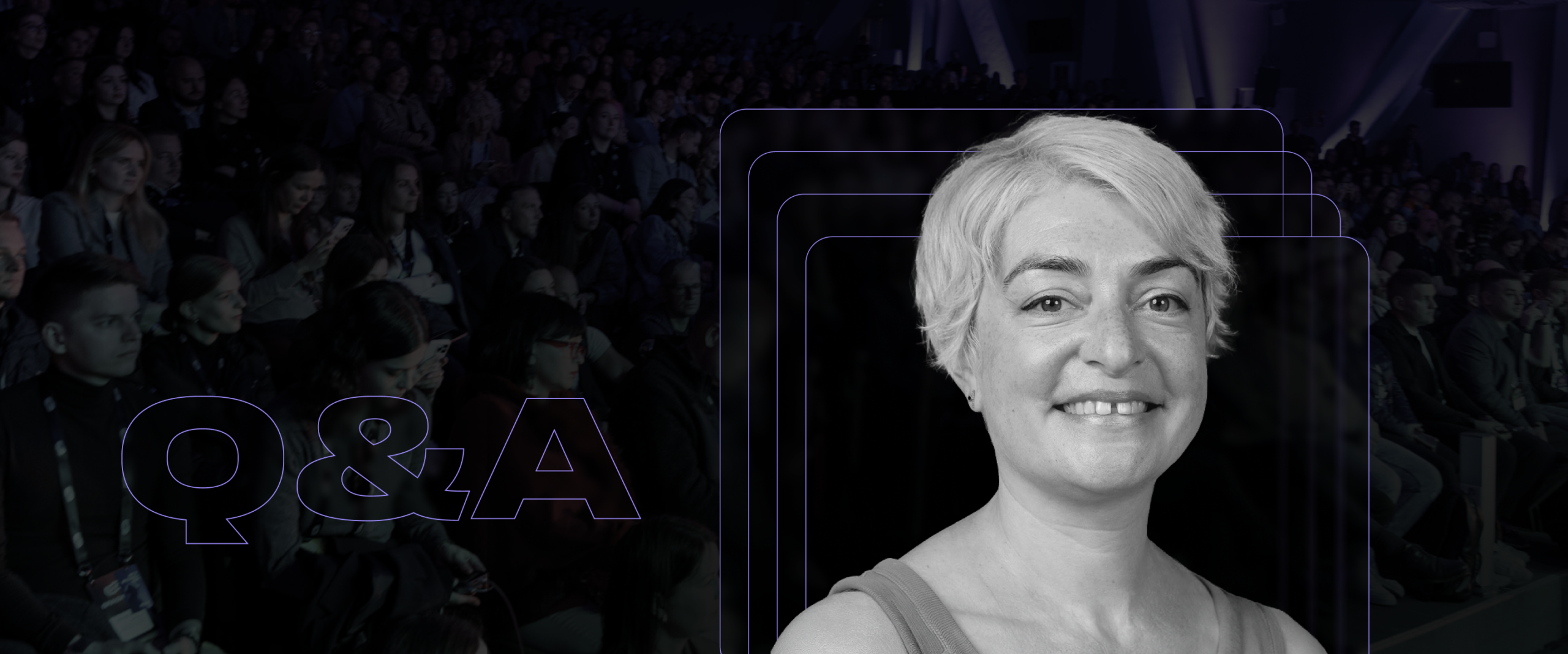
New technologies are transforming workflows, AI is reshaping everyday tasks, and teams are constantly adapting to new realities. Yet amid all this change, one thing remains essential: people.
Laura Morgan, Director of The Product Pathway, has spent more than fifteen years working in product and even longer in tech. Throughout her career, she has helped teams and organizations tackle complex challenges while keeping a strong focus on collaboration, strategy, and human-centered thinking.
This September, Laura will join the Product Stage at IT Arena 2026, where she will share her insights on the future of product management and the skills that will define successful product leaders in the years ahead.
We caught up with Laura ahead of IT Arena 2026 to talk about product leadership, adapting to rapid change, and the future of building great products.
— How do you approach building and improving products today in terms of balancing strategy, user needs, and execution? What advice would you give to teams launching products in today’s rapidly changing world?
— My number one piece of advice is to find the people to whom the work you do matters most, and listen to them! For a good product manager, it’s not just about seeing the big picture; it’s about understanding the specifics and working with them, rather than around or despite them.
In practice, that means being in direct conversation with stakeholders, users, and your team all the time; understanding real-time pressures, limitations, and pain points; and using that information to balance immediate priorities with overall objectives to find the sweet spot. Listen more than you talk.
— From your experience, what are the key factors that truly differentiate successful product teams from those that fail to scale?
— It’s always about people. Great teams share a vision, take ownership of outcomes, respect each other’s expertise, and truly listen.
Conway’s Law says that the structure of a software system mirrors the communication structure of the organization that builds it. I believe that the shape of the product mirrors the shape of the team.
— How would you compare product development in Ukraine with the UK, and what strengths or unique approaches have you seen in the Ukrainian tech ecosystem? Are you aware of any successful products from Ukraine that stand out to you?
— Ukraine has always had a strong engineering landscape, but product is coming to the fore now, driven both by the emergence of strong consumer product businesses and by the change in the operating context because of the war, which has created the need for innovation in areas like security, resilience, and defense.
Companies like Grammarly and GitLab have led the way, showing the rest of the world the strength of product innovation potential in Ukraine, and it increasingly feels like Ukraine is starting to tell its own story rather than being part of other people’s.
— How is AI changing the way products are built? What are the biggest shifts in product thinking teams need to prepare for right now?
— This is at the heart of my talk, which is about understanding the difference between the parts of product management that AI can help with and the parts that it can’t.
For every task that can now be done in 2-3 hours rather than 2-3 weeks, there’s another where human-to-human interaction becomes even more important. When you reduce the need for hands-on collaboration, the times when you do it are more crucial than ever.
— Having worked with organizations like The Economist, DAZN, BBC, Transport for London, and The Guardian, what are the most valuable product insights or lessons you’ve taken from these experiences?
— In a big organization, you need to find your allies — they can come in all shapes and sizes, so it’s important to take time to talk and — again — listen to lots of people, because you never know who will turn out to have the tools to help you make a change.
Unless you join at the director level or above, you can’t introduce product-forward ways of working at scale when you join a large company, but you can make incremental changes in your own domain, whatever size it is, to start to tell a story that people want to be a part of.
Starting small is fine. In every organization, though, there’s context and detail that you need to understand before you try to make changes. I don’t believe in written-in-stone “best practice” — the best practice is what works in that place, at that time, with those people.
— What topics or ideas are you most excited to share or explore at IT Arena 2026, and what key takeaways do you hope the audience will leave with from your session?
— I’m excited to hear more about the way things are changing in Ukraine and to learn about the work people are doing. The context is quite different from that in the UK, but the underlying truths about people are the same, so I’m keen to see how that looks in practice.
After my session, I hope people will be excited to take away some actionable tools and a bit less worried about being replaced by an LLM.
From navigating the impact of AI to building resilient product teams, Laura Morgan’s perspective highlights one key truth: the future of product management is as much about people as it is about technology. As the industry continues to change, the ability to listen, adapt, and lead with purpose will be more important than ever.
Want to hear more from Laura and other industry leaders? Explore the IT Arena 2026 speaker lineup and join us in Lviv this September.